

Fashion DTC
0.9s load, +32% conversion
Migrated a growing beauty label from Shopify Plus theme to headless Hydrogen + Next.js — with a component CMS the marketing team runs unsupervised.
Built on best-of-breed commerce infrastructure
 Shopify Hydrogen
 commercetools
 BigCommerce
 Sanity
 Contentful
 Algolia
 Stripe
 Vercel
Different teams have different KPIs. Our builds solve for each one — from the CMO shipping weekly drops to the MD reporting on annual TCO.
Book a Free Consultation →
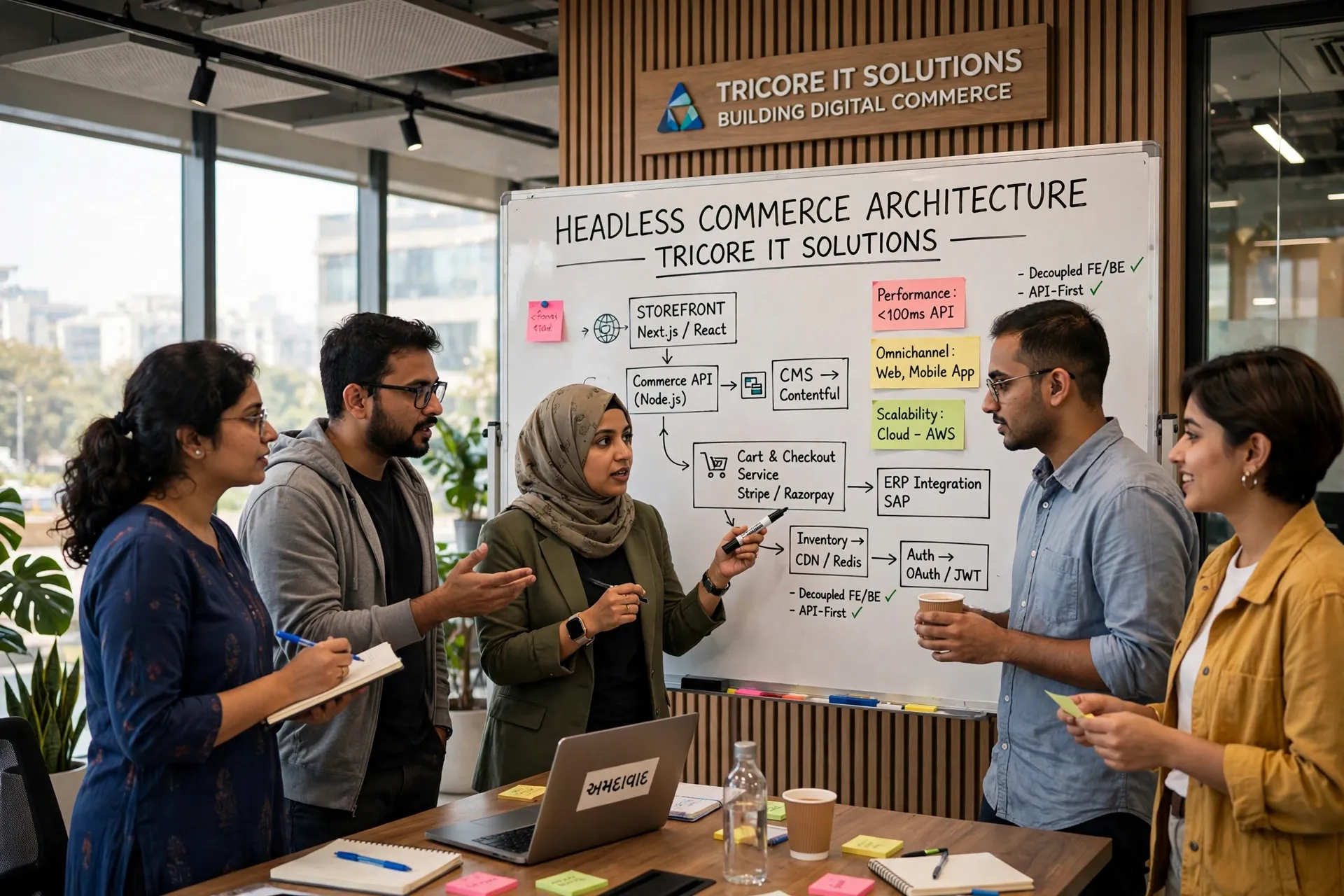
Launch landing pages, drops, and campaigns without a dev ticket. Drag-drop CMS your team actually adopts.

Go live in 8–12 weeks. Sub-second speed compounds into higher conversion, lower CAC, faster payback.
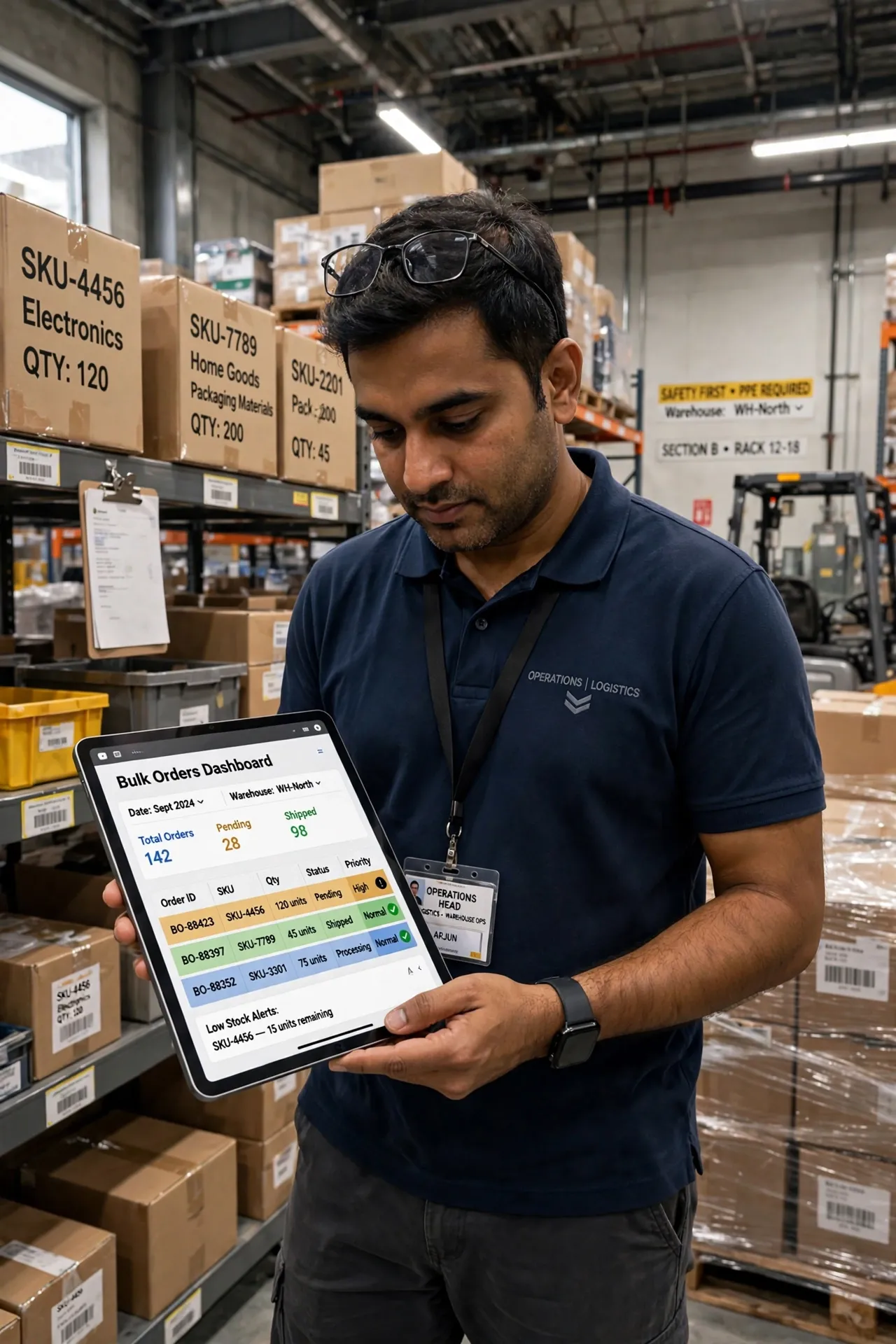
One backend for inventory, orders, and CRM. Stop firefighting sync issues between Shopify, ERP, and 3PL.
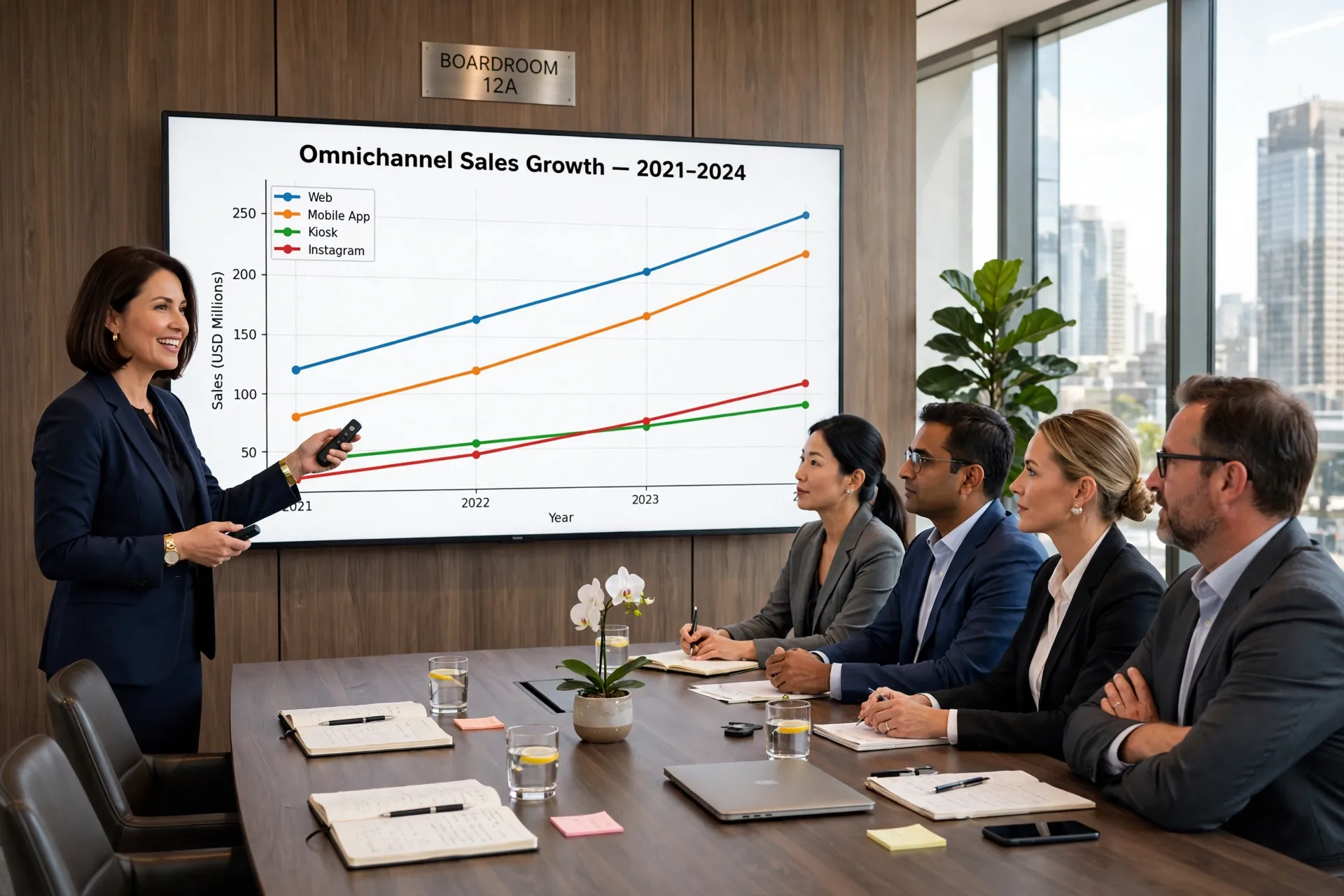
SOC2, PCI, auto-scale for flash sales, predictable TCO — and no vendor lock-in on any single layer.
Four patterns we see in every replatform conversation. If two apply to you, headless is the answer.
Heavy monolithic templates and poor Core Web Vitals push loads to 3–5 seconds, killing conversion at the top of funnel.
Every DTC store looks the same. Theme limitations block the differentiated brand experience your customers actually remember.
Your monolith can't power a mobile app, in-store kiosk, or Instagram shop from the same catalog without three separate rebuilds.
Marketing waits weeks for a landing page. Every campaign becomes a ticket in a dev backlog that's already three sprints deep.
Six workstreams that ship together — or slot into your existing team's roadmap.
Figma to Next.js, SSR/SSG, sub-second loads, 95+ Lighthouse across every route.
GraphQL gateway that stitches commerce, CRM, ERP, and 3PL into a single client-facing API.
Marketing owns the page. Component-based authoring in Sanity, Contentful, or Storyblok.
Faceted search, typo tolerance, and 1:1 recommendations powered by Algolia or Typesense.
CDN-first architecture with ISR, edge functions, and image optimization built in from day one.
One backend powers web, iOS, Android, kiosk, and social commerce endpoints — with unified analytics.
DTC, B2B, marketplace, content-led — the architecture changes with your business model, not your logo.
Book a Free Consultation →Best for: Lifestyle, beauty, and fashion labels
A polished storefront for beauty, fashion, and lifestyle brands — with editorial content blocks, shoppable video, and a checkout tuned for mobile-first buyers.
Faster page loads versus monolithic Magento or Salesforce Commerce.
Average conversion uplift measured after headless replatform.
Less dev dependency for the marketing team on weekly launches.
Weeks from kickoff to a launched, cutover storefront.
A side-by-side across the six criteria that show up in every executive commerce review.
| Business outcome | Monolithic platform | DIY headless | Tricore headless build |
|---|---|---|---|
| Page speed | Heavy, 3–5s loads | Depends on team | ✓ Sub-second + edge |
| Marketing autonomy | Ticket the devs | Partial | ✓ Full drag-drop CMS |
| Omnichannel | One channel only | Custom per channel | ✓ One backend, N frontends |
| Total cost (yr 2) | High + platform fees | Unpredictable | ✓ Predictable, swappable |
| Time to launch | 6–9 months | 9–15 months | ✓ 8–12 weeks |
| Security / compliance | Vendor-locked | You own it (risky) | ✓ PCI + SOC2 patterns |
No single-vendor lock-in. Swap any layer without rebuilding the rest.
Discuss Your Tech Stack →The same disciplined process we've run for DTC founders, B2B distributors, and enterprise retail — with clear gates at every phase.
We map your funnel, integrations, and revenue blockers. You get a Lighthouse report, integration map, and 12-month ROI projection.
Component-based Figma design system, API contracts, and CMS content model — reviewed with marketing, ops, and engineering.
Storefront, API gateway, CMS, and integrations built in parallel sprints. QA, load testing, and staging cutover included.
DNS cutover with rollback, RUM monitoring, and a 90-day post-launch optimization sprint to lock in conversion gains.
Three recent builds where headless changed the trajectory of a business — not just the tech stack.
Migrated a growing beauty label from Shopify Plus theme to headless Hydrogen + Next.js — with a component CMS the marketing team runs unsupervised.
Built a wholesale portal with customer-specific pricing and credit terms — ops went from three CSV syncs a day to zero.
Consolidated three sibling DTC brands onto one commercetools backend with three distinct Next.js storefronts — shared cart, unified analytics.
Security, compliance, and scale MDs and Ops Heads need — without a two-year procurement cycle.
Talk to an Enterprise Expert →Tokenized checkout, audit logs, RBAC, and pen-test-ready deploys from day one.
Edge caching, CDN, and 24/7 monitoring — with runbooks for every failure mode.
Handles flash sales and 10× traffic spikes without a single infra ticket.
No hidden platform fees. Each layer is swappable — you never get locked in.
Still have questions? Book a call and we'll walk your team through it in 30 minutes.
No. Every page is composed from CMS-managed components (Sanity, Contentful, or Storyblok). Marketing publishes without deploys — you get the same authoring speed as a Webflow site, backed by a real commerce engine.
Across the last twelve builds, conversion lifted 20–40% within the first quarter after cutover, and 12-month TCO dropped 25–35% once platform fees and dev-support hours were rolled in.
Yes. We build to PCI-DSS 4.0 patterns, ship SOC2-friendly logging and RBAC, and support single-tenant deploys where required. We'll walk your security team through the architecture during discovery.
8–12 weeks for a standard DTC or B2B build, including CMS content migration and integrations. Enterprise multi-brand programs run 4–6 months, phased so you launch brand-by-brand rather than big-bang.
Fixed-scope builds start at $60K for DTC, $120K for B2B portals, and scale from there for enterprise. Every proposal ships with a phased payment plan tied to launch milestones — no open-ended retainers.
Fully. All code is delivered into your GitHub org, deployed into your Vercel / Cloudflare / AWS account, and documented so any competent team can maintain it. There is zero Tricore lock-in.
Book a free commerce audit. Within 48 hours you'll get a speed report, an integration map, and a 12-month ROI projection tailored to your brand.
We build headless storefronts that load in under 1 second, let your marketing team launch campaigns without devs, and sell everywhere — web, app, kiosk, social — from one backend.